
Servers, clients and cloud
- Linux servers, Linux services and mixed system environments
- Apple/macOS workstations in the corporate network
- Servers, clients, Microsoft 365 and supporting cloud services
- Supply, setup and maintenance of IT systems
We plan, secure and support systems, networks and software. Our focus is on Linux and Apple/macOS environments, and Windows is part of the picture as a matter of course. You have one contact for all of it – from the network outlet in the wall to the update on the server.
As a Sachverständigenbüro (certified expert office) for IT security, we assess technical risks, protective measures and evidence with a view to how the business actually runs. We document the measures so they can be traced, assess them from a technical standpoint and explain the reasoning behind every recommendation.
Illustrative view of typical audit areas.
We plan, build and run your IT infrastructure to fixed standards: Linux servers, Apple/macOS workstations, network structure, hotel Wi-Fi and site-to-site connectivity.
We plan and install structured cabling and splice fibre with our own splicer. Every link is measured, qualified and documented – so that nobody has to guess when a fault occurs.

We build web tools, APIs, dashboards and integrations for processes that should run faster, clearer and with fewer errors. Focus: software for Linux, Apple/macOS and Windows.
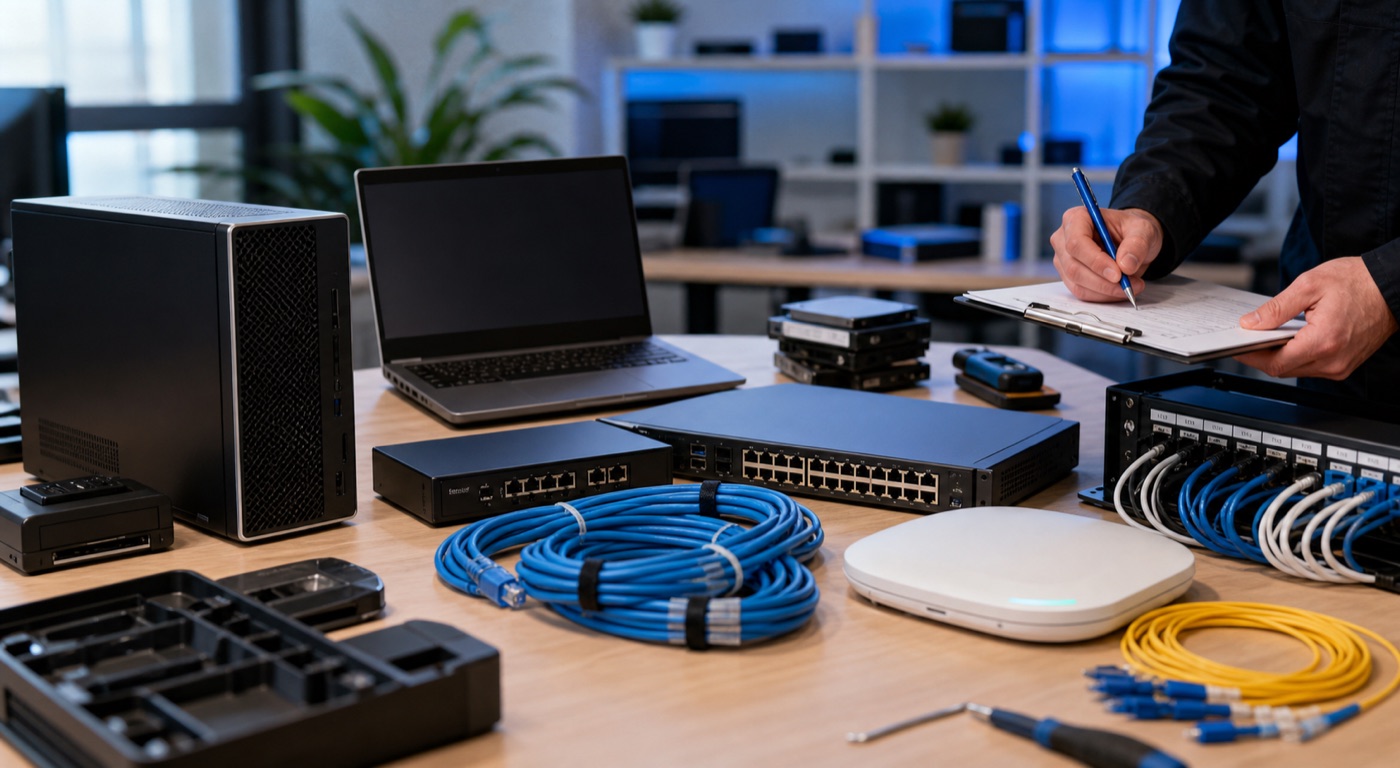
We supply and support IT components with the whole environment in mind. Workstations, servers, firewalls, switches, access points, backup targets and peripherals are matched to each other technically.
Technology has to stay understandable and operable day to day. So we build the inventory, the implementation and the ongoing support in a way you can follow.
Capture systems, network, risks, data flows, requirements and responsibilities.
Set the structure, hardware, cabling, security, roles and priorities.
Install, migrate, measure, secure, document and hand over.
Maintain, monitor, improve, provide support and develop the software further.
A short phone call is usually enough to tell whether this is a network issue, a security issue or a process issue. After that you know more – at no cost.